
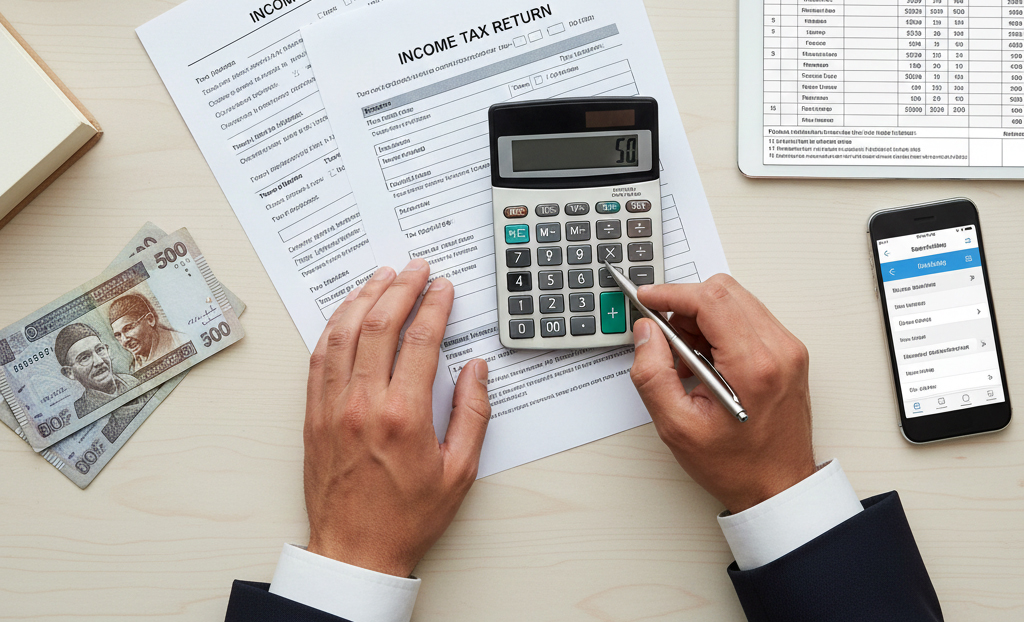
Inland Revenue Department (IRD) collects Income Tax under the Inland Revenue Act, No. 24 of 2017 (as amended) — levying tax on “gains and profits” of every person (individuals, companies, partnerships, trusts, etc.) for each “year of assessment”.
Income tax applies to income from various sources, including employment, business, investments and other income (rent, interest, dividends, etc.), depending on residency status. For a Sri Lankan resident individual, worldwide income is taxable; for a non-resident, only income sourced from Sri Lanka is chargeable.
Who Is Liable — Corporate Tax, Individual Tax, Partnership Tax
- Corporate Entities (Companies, Trusts, NGOs, etc.) — Companies incorporated or operating in Sri Lanka are subject to Corporate Income Tax (CIT).
- Individuals (Both Employed & Business-owners / Investors): Income from employment, self-employment/business, investments, and other income are taxed under Personal/Individual Income Tax (IIT or PIT).
- Partnerships — Income derived by partnerships is also taxable under the same law.
Thus, almost all forms of income — whether from personal salary, business profits, investment returns, or corporate profits — are potentially taxable under Income Tax, subject to the Act’s provisions.
Current Tax Rates in Sri Lanka
- For companies (standard rate), CIT is 30% of taxable income.
- For individuals, income tax follows a progressive tax structure (with a personal relief threshold), as per IRD guidelines.
- Special higher rates apply for certain categories of business income (e.g., profits from gambling/gaming, manufacture or sale/import of liquor or tobacco products) under the law.
Why You Should Pay Income Tax — Importance from a National & Business Perspective
Timely payment of income tax is crucial — not only because it’s a legal obligation, but also because:
- It funds public services and infrastructure: Income tax revenue supports government expenditure on health, education, transport, social services, and national development — benefiting society at large.
- Promotes fairness in taxation: By taxing income and profits rather than just consumption or indirect taxes, the tax system ensures those earning more contribute fairly, helping redistribute wealth and support social equity.
- Enables stable business environment: When businesses comply with tax obligations, it enhances transparency, builds credibility (with banks, investors, partners), and reduces legal risk — which is vital for long-term planning, financing, and expansion.
- Supports macroeconomic stability: Reliable tax revenue reduces dependence on external borrowing, helps maintain fiscal discipline, and ultimately contributes to overall economic health and investor confidence.
Key Dates & Deadlines for Income Tax Payment & Filing
Under current regulations for self-assessment taxpayers:
| Payment / Filing / Event | Deadline / Due Date |
| Submission of Statement of Estimated Tax Payable (SET) | On or before 15 August of the current year of assessment |
| Payment of Income Tax — Quarterly Installments (if you are an instalment payer) | 1st Inst.: by 15 August 2nd Inst.: by 15 November 3rd Inst.: by 15 February 4th Inst.: by 15 May of following year |
| Final Installment (if any) or adjusted payment | On or before 30th September of following year |
| Filing Income Tax Return (for companies / others) | By 30th November of following year |
Consequences of Default, Late Payment or Late Filing — Interest, Penalties & Legal Risk
Failure to comply with filing or payment obligations under the law can result in substantial penalties and interest:
- For late filing of return, penalty is the greater of 5% of the tax owing plus 1% of the tax owing for each month (or part thereof) of delay, or LKR 50,000 plus an additional LKR 10,000 for each month (or part thereof) of delay — whichever is greater.
- For late payment of tax due: penalty is 20% of unpaid tax if not paid within 14 days after due date. For instalment defaults: penalty is 10% of unpaid instalment.
- Additionally, interest is typically charged on outstanding amounts at a monthly rate (often cited at 1.5% per month, i.e. 18% per annum) for delayed payment.
- Persistent non-compliance — including failure to file returns — may lead to further legal consequences under the law.
As recently emphasized by the IRD, such interest & penalties “will not be waived or reduced under any circumstances.
For businesses that remain inactive (no operations) — filing is still mandatory: even then, non-filing is treated as non-compliance and attracts automatic penalties.